FTSE Climbs as Shell Profits and Defence Strength Counter Banking Slump
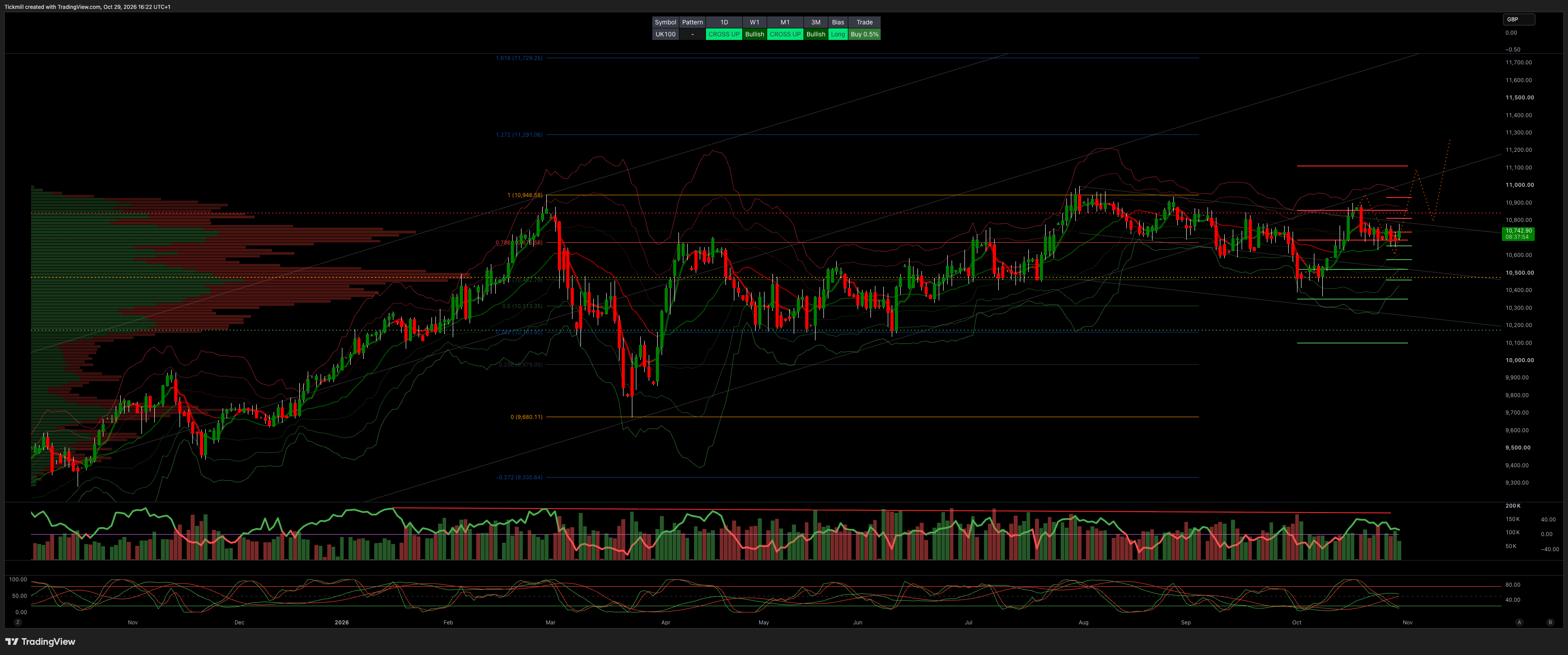
FTSE Climbs as Shell Profits and Defence Strength Counter Banking Slump
London's benchmark FTSE 100 gained ground on Thursday, trading up around 0.34% . Robust earnings and upgraded shareholder returns from energy giant Shell buoyed broader risk appetite, helping offset a steep sell-off in consumer healthcare and weakness across retail lenders. Investors navigated a heavy slate of corporate earnings while monitoring domestic fiscal developments and awaiting pivotal U.S. personal consumption expenditures (PCE) inflation data.
Oil and gas majors led top-flight gainers, driving the broader energy sector 2.8% higher despite slight softness in underlying crude prices. Shell shares surged 3.2% after delivering quarterly earnings of $10.81 billion—its highest since 2022—fuelled by strong refining margins amid geopolitical disruptions in the Middle East and Eastern Europe, alongside an expanded $5 billion share buyback program for Q4. BP advanced over 1% in sympathy. Defence contractors also rallied after Chancellor John Healey signalled that budget "reprioritisation" would bridge a £4.7 billion shortfall in the U.K. Defence Investment Plan, propelling BAE Systems up 2.6% and Rolls-Royce Holdings 1.1%. Advertising giant WPP added 2.1% as its turnaround strategy gained traction following a smaller-than-anticipated drop in Q3 like-for-like revenues, while National Grid gained 1.1% after pledging roughly £400 million to extend the lifespan of the U.K.-France electricity interconnector to at least 2050.
In sharp contrast, consumer health and pharmaceutical counters faced intense selling pressure. Haleon plummeted 15.6%—marking its steepest single-day drop since its 2022 demerger and IPO—after management downgraded its full-year organic revenue growth guidance to 2.5%, overshadowing a £500 million share repurchase announcement. The slump exacerbated broader sector headwinds following GSK’s earnings disappointment earlier in the week. Domestic banks also lost ground: Lloyds Banking Group dropped 4.3% as lacklustre third-quarter figures and unchanged full-year guidance triggered profit-taking, following Wednesday’s relief rally after Chancellor Healey unveiled less punitive bank and gambling tax measures than previously feared in the Budget.
On the monetary policy horizon, market attention is rapidly converging on the Bank of England’s upcoming November 5 Monetary Policy Committee (MPC) meeting. Money markets and economists increasingly anticipate a 25-basis-point hike in the Bank Rate to 4.00%, aligning with earlier policy tightening by the ECB and Fed. With external hawks Megan Greene and Catherine Mann joined by Chief Economist Huw Pill in voting for increases at recent meetings, growing upside inflation risks, persistent energy cost pressures, and resilient Q3 output momentum are expected to sway swing voters—including Governor Andrew Bailey, Deputy Governor Clare Lombardelli, and Dave Ramsden—toward a 6–3 majority in favor of a precautionary hike to head off potential second-round wage-price effects.
Finish Line: Heavyweight energy earnings and defence reprioritisation provided ample momentum to keep the FTSE 100 on positive ground, absorbing severe single-stock drag from Haleon's guidance cut and post-budget bank softness. With the BoE's November 5 decision looming and structural energy inflation keeping rate expectations elevated, the blue-chip index continues to demonstrate underlying resilience around the mid-10,700 level.
Disclaimer: The material provided is for information purposes only and should not be considered as investment advice. The views, information, or opinions expressed in the text belong solely to the author, and not to the author’s employer, organization, committee or other group or individual or company.
Past performance is not indicative of future results.
High Risk Warning: CFDs are complex instruments and come with a high risk of losing money rapidly due to leverage. 68% and 74% of retail investor accounts lose money when trading CFDs with Tickmill UK Ltd and Tickmill Europe Ltd respectively. You should consider whether you understand how CFDs work and whether you can afford to take the high risk of losing your money.
Futures and Options: Trading futures and options on margin carries a high degree of risk and may result in losses exceeding your initial investment. These products are not suitable for all investors. Ensure you fully understand the risks and take appropriate care to manage your risk.
Patrick has been involved in the financial markets for well over a decade as a self-educated professional trader and money manager. Flitting between the roles of market commentator, analyst and mentor, Patrick has improved the technical skills and psychological stance of literally hundreds of traders – coaching them to become savvy market operators!